
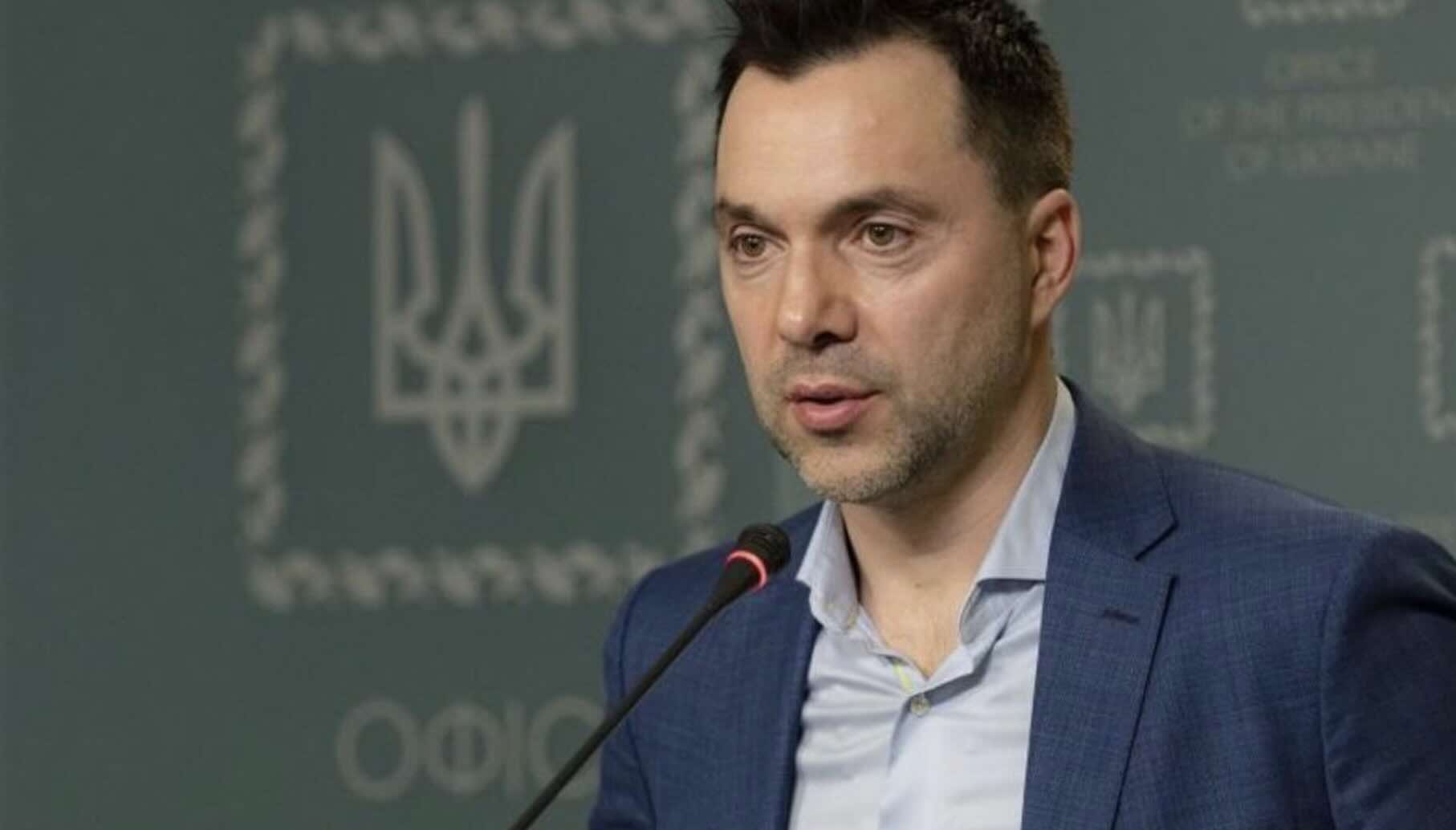
OpTV channel journalist Rūta Janutienė's interview with former advisor to Ukraine's President Volodymyr Zelensky, Oleksiy Arestovych, is a conversation that touches on topics often discussed cautiously or not at all in the public sphere.
In this interview, A. Arestovych clearly distinguishes two things: Ukraine's right to defend itself against Russian aggression and the assessment of V. Zelensky's government. His basic formula is brief: Ukraine – yes, Zelensky – no. According to A. Arestovych, Russia is the aggressor, Vladimir Putin is a war criminal, but this does not mean the West should turn a blind eye to corruption, forced mobilization, restrictions on citizens’ rights, and societal divisions within Ukraine itself.
In the conversation, A. Arestovych states that Ukraine's problem is not only the Russian invasion. In his view, even before the war, a state model was being created in the country that divided people into "right" and "wrong," narrowed civil freedoms, and pushed part of society out of public life. Arestovych warns that Ukraine can achieve military victory but lose peace if after the war the Constitution, justice, citizens' rights, and trust in the state are not restored.
Another important topic is Russia's strategic position. Arestovych believes Moscow has not achieved its main war goals: NATO has not only not retreated to the 1997 borders but has expanded further with the accession of Finland and Sweden. According to him, Ukrainian drone strikes on Russian oil, logistics, and military facilities are changing the course of the war and eroding Russia's internal "social contract," since the war is already reaching deep into Russia.
A separate part of the interview is devoted to Belarus and the Baltic States. Arestovych warns that it would benefit Russia to increase tension near the Belarusian border, forcing Ukraine to divert some forces from the main front. He also discusses tactical nuclear weapons as a possible escalation and information operation in which Belarus could be used as a pressure tool.
Talking about the Baltic States, Arestovych does not rule out that drone incidents in the region may be related to technical failures, electronic warfare, or attempts to bypass Russian air defenses from unexpected directions. However, he says he does not believe Ukrainian officers deliberately seek to draw the Baltic States into the war. In his view, the most realistic threat Russia poses to the Baltic States in the near future is not a direct tank assault but hybrid pressure: provocations, information operations, airspace violations, fear-mongering, and attempts to test NATO's unity.
The interview also addresses the Kaliningrad issue, Europe's rearmament, Western interest in Ukraine holding Russia back as long as possible, and the issue of Belarusian potash fertilizer transit. According to Arestovych, Lithuania’s decisions regarding Belarusian potash transit may have strengthened Russia’s position in the global fertilizer market and reduced Belarus's room for maneuver, pushing it further towards Moscow.
This is a conversation about war without simple answers. About Russian aggression, but also about Ukraine's internal problems. About support for Ukraine, but also about corruption. About the security of the Baltic States, but also about the danger when political rhetoric itself becomes part of the escalation.
Source: OpTV
Comments
0No comments yet.